
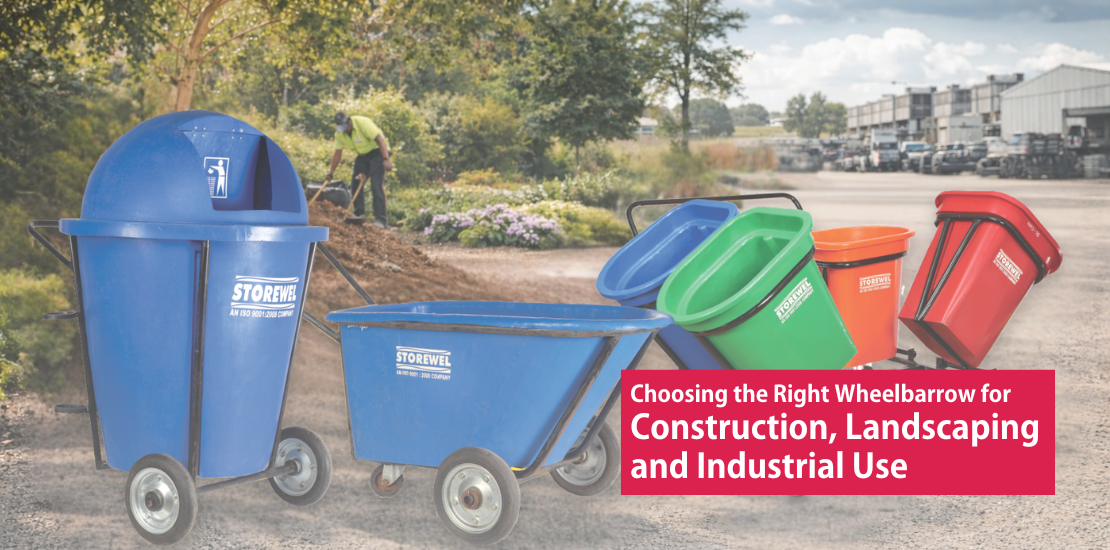
Wheelbarrows may appear to be simple equipment, but in construction sites, landscaping projects and industrial facilities, the right choice directly impacts productivity, safety and long-term operational costs. Selecting an unsuitable wheelbarrow often results in frequent breakdowns, higher maintenance, operator fatigue and workflow delays.
For businesses focused on efficiency and durability, choosing the right wheelbarrow is not a minor decision. It requires understanding material behaviour, usability and lifecycle performance rather than just initial price.
1. Start with the Right Question: Metal or Plastic?
Instead of focusing on specific applications or load ratings, the more practical starting point is deciding whether a metal wheelbarrow is required or whether a well-designed plastic wheelbarrow will do the job effectively.
Metal wheelbarrows are traditionally associated with strength, but they also come with drawbacks such as rusting, denting, higher weight and frequent repairs. Over time, these issues affect handling comfort and increase maintenance effort.
Plastic wheelbarrows, when made with durable, purpose-built materials, offer a strong alternative. They are resistant to rust, lighter to handle and better suited for environments where moisture, outdoor exposure and frequent movement are involved.
For most day-to-day construction, landscaping and industrial handling tasks, a durable plastic wheelbarrow delivers reliable performance without the downsides of metal.
2. Structural Design Over Raw Load Claims
Rather than comparing load capacities between metal and plastic wheelbarrows, a more meaningful evaluation lies in overall structural design and stability.
- A well-designed wheelbarrow should provide:
- A strong, consistent body shape that holds material securely
- Balanced weight distribution to reduce tipping
- Stability during movement, even when fully loaded
Structural integrity is not only about carrying weight, but about maintaining shape, balance and usability over repeated use. A wheelbarrow that deforms, rusts or becomes unstable leads to downtime and reduced worker confidence.
3. Material Quality Matters More Than Appearance
Metal wheelbarrows often appear robust initially, but exposure to moisture, cement residue and outdoor conditions leads to corrosion and surface damage. Over time, they become heavier, harder to manoeuvre and costlier to maintain.
Low-quality plastic options may crack or warp under pressure, making material selection critical.
High-quality, durable plastic wheelbarrows offer:
- Resistance to corrosion and weather exposure
- Lightweight handling without compromising usability
- Consistent performance over long periods
Material quality directly influences lifespan, maintenance frequency and overall value.
4. Ergonomics and Ease of Handling
Wheelbarrows are manually operated tools, making ergonomics a key factor in productivity and safety.
Important ergonomic considerations include:
- Comfortable handle grip
- Proper balance to reduce strain and tipping
- Smooth movement across uneven surfaces
A wheelbarrow that is easier to handle reduces operator fatigue, improves safety and allows teams to work more efficiently throughout the day.
5. Wheel Quality and Mobility
The wheel is a critical component often overlooked. Poor wheel quality leads to instability, difficult movement and frequent breakdowns.
A reliable wheelbarrow should offer:
- Durable wheels suitable for rough surfaces
- Smooth rolling for better control
- Stability across uneven terrain
Good mobility directly improves speed, control and site efficiency.
6. Maintenance and Lifecycle Cost
Many businesses focus only on the purchase price, overlooking lifecycle cost. Rusting, repairs and frequent replacements significantly increase long-term expenses.
Choosing a durable, low-maintenance wheelbarrow helps:
- Reduce replacement frequency
- Lower repair and upkeep costs
- Maintain consistent performance over time
Lifecycle value is far more important than initial cost.
Why Businesses Choose Storewel Wheelbarrows
For construction firms, landscapers and industrial facilities, Storewel offers wheelbarrows designed for real-world use and long-term reliability.
Storewel wheelbarrows are built to deliver:
- Durable yet lightweight construction
- Resistance to corrosion and wear
- Balanced design for easy handling
- Suitability for regular, heavy-duty use
- Lower maintenance and longer service life
By combining material reliability with practical design, Storewel helps businesses improve efficiency, reduce downtime and achieve better value from everyday equipment.
Choosing the right wheelbarrow is not just about moving material. It is about productivity, safety and long-term operational efficiency. Storewel wheelbarrows are designed to support all three.