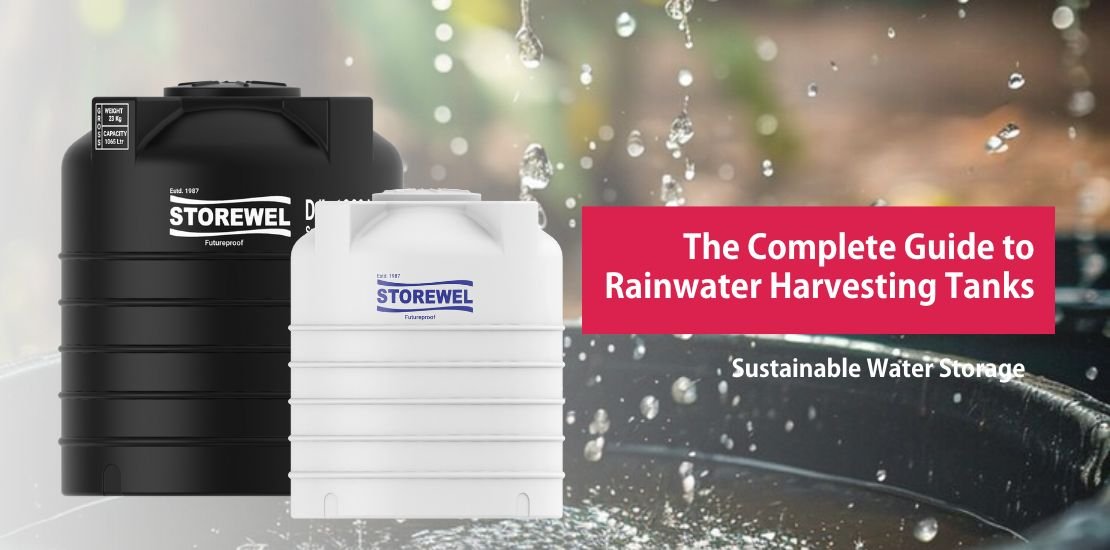
Think that turning every rainfall into a tangible resource for your home, garden or business. That’s the power of modern rainwater harvesting a practice that’s evolved from simple conservation to a smart, essential component of sustainable living. At the heart of this system lies one critical element: the rainwater harvesting tank.
This isn’t just about saving water, it’s about securing it. Storewel, a leader in premium Rainwater harvesting tanks, provides the durable foundation for any effective rainwater harvesting system. Let’s explore how you can harness the rain.
Why Harvest Rainwater? It’s No Longer a Choice, But a Necessity
Water scarcity isn’t a distant problem. With fluctuating climates and growing demand, every drop we can conserve counts. Rainwater harvesting is a direct, efficient response. It involves collecting and storing runoff from surfaces like rooftops for later use. The benefits are profound:
Slash Your Water Bills: Reduce dependence on municipal supplies for gardening, washing, flushing, and more.
Become Water Independent: Create a personal water reserve, insulating yourself from shortages or restrictions.
Protect the Environment: Decrease stormwater runoff, which reduces erosion, flooding, and pollution in local waterways.
Unmatched Plant Health: Rainwater is naturally soft, free of chlorine and salts, making it superior for gardens and agriculture.
Conserve Groundwater: By using harvested rain, you help recharge precious underground aquifers.
How Rainwater Harvesting Tanks Work: A System Designed for Efficiency
A well-designed system does more than just collect water; it collects clean, usable water. Here’s how the components work together, with the tank as the central hub:
Catchment Area: Typically your roof. The material, slope and size determine potential collection volume.
Conveyance System: Gutters and downpipes that channel water from the roof.
First Flush Diverter: A crucial device that discards the initial rain, which washes dust and debris from the roof.
Filtration Unit: Filters remove fine particles, leaves, and pollutants before water enters storage.
The Storage Tank: This is where Storewel excels. It’s the reservoir for your purified rainwater. Tank quality determines water safety, longevity, and system ROI.
Delivery System: A pump (or gravity feed) and piping to deliver water to points of use, often with a final inline filter for potable uses.
Choosing Your Rainwater Tanks: Why Storewel Stands Apart
Not all tanks are created equal. Your tank is a long-term investment. Here’s what sets Storewel tanks apart as the intelligent choice for a robust harvesting system:
Engineered for Purity & Durability: Made from food-grade, UV-stabilized materials, Storewel tanks prevent algae growth and ensure no chemical leaching, safeguarding water quality for years.
Structural Integrity: Advanced ribbed design and seamless construction offer superior strength to withstand internal pressure and external elements, unlike flimsier alternatives.
Smart Customization: From compact underground models for space-saving to large-capacity above-ground tanks, Storewel provides tailored solutions for homes, farms, industries, and institutions.
Optimized for Low Maintenance: Features like smooth inner surfaces, secure, insect-proof lids, and accessible outlets make cleaning and upkeep straightforward.
Aesthetic & Space-Smart Designs: Modern contours and color options mean your tank can blend into your property seamlessly or be discreetly installed underground.
Key Factors for a Successful Harvesting Rainwater Tanks
To maximize your system’s yield and value, consider these factors alongside selecting a premium Storewel tank:
Local Rainfall Patterns: Understand average rainfall and distribution to size your tank correctly.
Catchment Area Size: Your roof area dictates the maximum volume you can collect.
Intended Water Use: Garden irrigation requires different filtration than indoor, non-potable uses (e.g., laundry, toilets).
Storage Capacity: Your tank must balance catchment supply with your demand. An undersized tank overflows and wastes water; an oversized one is an unnecessary cost.
Professional Installation: Proper setup of pre-filters, stable tank foundation, and safe plumbing is key to system performance and longevity.
Storewel: More Than a Water Tank, a Partnership in Sustainability
Choosing Storewel is a commitment to quality and sustainability. We provide more than just a container; we offer a reliable component engineered for performance. In an era where water security is paramount, a Storewel rainwater harvesting system is a proactive step toward resilience, savings, and environmental stewardship.
Ready to transform rainfall into a resource? Explore our range of engineered rainwater harvesting tanks and begin designing your sustainable water solution today.
Frequently Asked Questions (FAQs)
Q1: Is rainwater from a harvesting system safe to drink?
While rainwater is naturally pure, it can collect contaminants from the atmosphere and catchment surface. With proper first-flush diversion, multi-stage filtration, and ultraviolet (UV) purification, it can be made potable. For drinking uses, consult with a water treatment specialist and use a tank certified for potable water storage, like those from Storewel.
Q2: What size rainwater tank do I need?
This depends on your roof area, local rainfall, and water usage goals. A simple rule is: Tank Capacity (Liters) ≈ Roof Area (sq. m) x Rainfall (mm) x Collection Efficiency (0.8). A Storewel expert can help you perform a detailed calculation.
Q3: How much maintenance does a rainwater harvesting system require?
Minimal but essential. It involves cleaning gutters and pre-filters every 3-6 months, checking the first flush diverter, and inspecting the tank interior annually. High-quality, smooth-walled tanks like Storewel’s significantly reduce cleaning difficulty.
Q4: Can I install a rainwater tank myself?
For small above-ground systems, DIY installation may be possible. However, for optimal performance, proper grounding, stable foundations, and correct plumbing, professional installation is strongly recommended, especially for large or underground tanks.
Q5: Why is the tank considered the most critical component?
The tank is the long-term investment and the guardian of your harvested water. A poorly made tank can contaminate water, crack, leak, or fail, negating the entire system’s value. A Storewel tank ensures the water you collect stays clean and secure for the long run.