In equipment manufacturing, the smallest component can sometimes create the biggest challenge.
A tank may need to fit into a limited space. A cover may need to match a specific machine profile. A fender may need to handle regular field use. A toolbox or enclosure may need to become part of the equipment without affecting its function or appearance.
This is where standard parts can fall short.
For OEMs, every machine has its own design, purpose and operating environment. A component that works well for one application may not work for another. That is why customization becomes important.
At Storewel, custom rotomoulded components are developed around the actual needs of the equipment.
These questions matter because a good component should do more than simply occupy space. It should support the overall performance of the equipment.
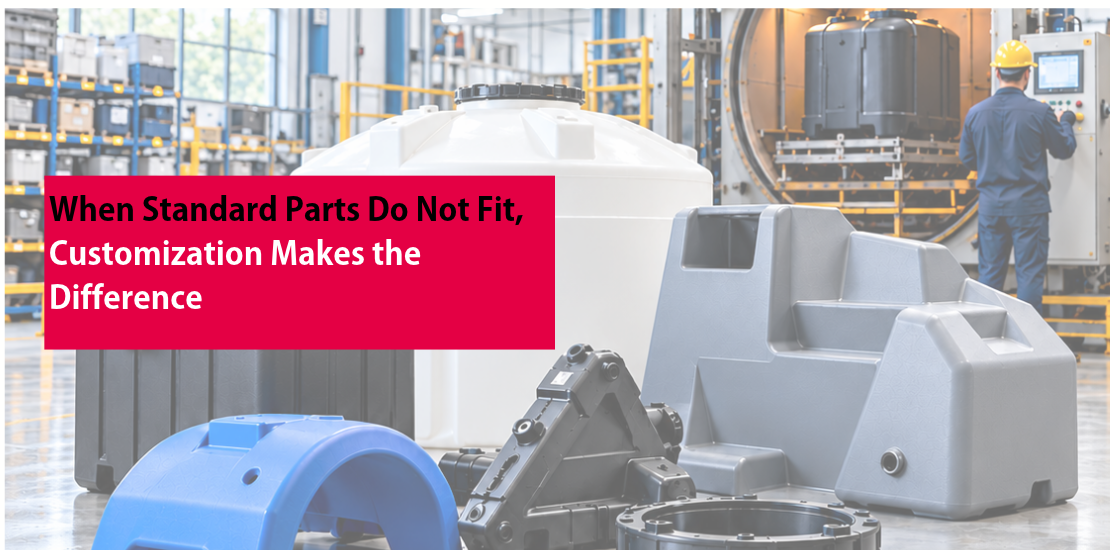
Storewel works with OEMs across applications such as construction equipment, robotics, agricultural machinery, material handling equipment and industrial equipment. Depending on the requirement, custom rotomoulded parts can include tanks, covers, fenders, hoppers, toolboxes, guards and enclosures.
One of the biggest advantages of customization is design flexibility.
This helps manufacturers create products that feel more integrated and purposeful.
The next important step is tooling and rotomoulding.
Once the design direction is finalized, the right tooling and moulding approach help convert the idea into a production ready component. Rotomoulding is especially useful for creating durable hollow plastic parts with consistent construction and design flexibility.
But manufacturing does not end when the component comes out of the mould.
Assembly and quality assurance are equally important. The final part needs to meet the intended application and be ready to become part of the equipment. Attention to finishing, fit and quality checks helps support consistency across production.
For OEMs, this complete approach can simplify the journey from concept to finished component.
At Storewel, custom rotomoulding starts with understanding the equipment, the application and the role each component needs to play. The focus is not simply on making a plastic part, but on developing a component that fits better, performs reliably and works naturally with the overall equipment design. When a standard part does not meet the requirement, manufacturers should not have to compromise or redesign around it. A better approach is to develop the component around the actual need, and that is where customisation adds real value.